The Digital Bits Science Labs are fun science experiments for young children. Kids, make sure you have an adult's permission before trying any of these science experiments.
Digital Bits Science Lab
Science Experiments for Kids, Parents and Teachers
How to join and separate two streams of water – surface tension in action
Description:
Surface tension is a special attribute of water. When water is exposed to air, it forms a thin “skin” that keeps the water together. This is how some bugs skim over a water’s surface: surface tension keeps them from sinking into the water.
This experiment demonstrates surface tension. In it, we can join together two separate streams of water.
Equipment needed:
A used 2-liter pop bottle or milk carton (or some similar plastic container you can cut holes into)
A sharp knife (for cutting small holes in the bottle)
Water
A sink
The Digital Bits Science Lab Experiment:
Cut two vertical holes in the bottle. They should be about 1/8 of an inch apart. They should be no more than 1/4 of an inch tall.
Hold the bottle over a sink. Fill the bottle with water.
Water will start to pour out of the holes. If you’ve cut them right, the water should form two streams, and shoot straight out from the bottle. Adjust the cuts if needed to make sure this happens.

Join the water streams by “pinching” the streams together, right where they leave the bottle. Your pinch should push the streams together, mixing their water into one stream.
When you take your hand away, the streams will be joined.
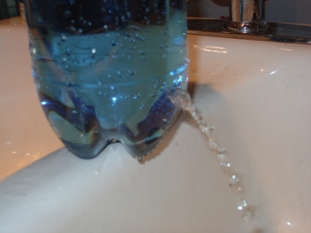
Next try “wiping” the streams: with a flat hand, quickly wipe your palm down the bottle, over the streams. If you do it right, the single stream will separate into two streams again.
What’s happening here?
The streams of water start off separated, since the water is coming out of two different holes when you start the water flow. But when you “pinch” the streams together, you’re forcing the water streams to join together. And because of surface tension, the streams decide to stay joined even after you finish the pinch. When you “wipe” your hand down the streams, you’re breaking the surface tension and the streams once more become separated.
Other articles related to this topic:
- Learn about air pressure from a leaky bottle
- Demonstration of surface tension
- Power a boat with surface tension: Make a “zoomer”
- Move a stream of water with a balloon and static electricity
- Hot air takes up more space than cold air